Credentials & Affiliations
American Board of Oral & Maxillofacial Surgery
Board Certified
American Association of Oral & Maxillofacial Surgeons
Fellow
American College of Surgeons
Fellow (FACS)
Regional Top Oral Surgeon
Distinction 2024
UCSF Medical Center Hospital Privileges
Active Affiliation
International Team for Implantology
Fellow
Referred by your dentist. Trusted with your jaw.
Three board-certified surgeons. Thousands of completed procedures. A consultation that feels like a conversation — not a sales pitch. We'll show you exactly what will happen, who will operate, and why.
The Surgical Team
You're not choosing whether to proceed.
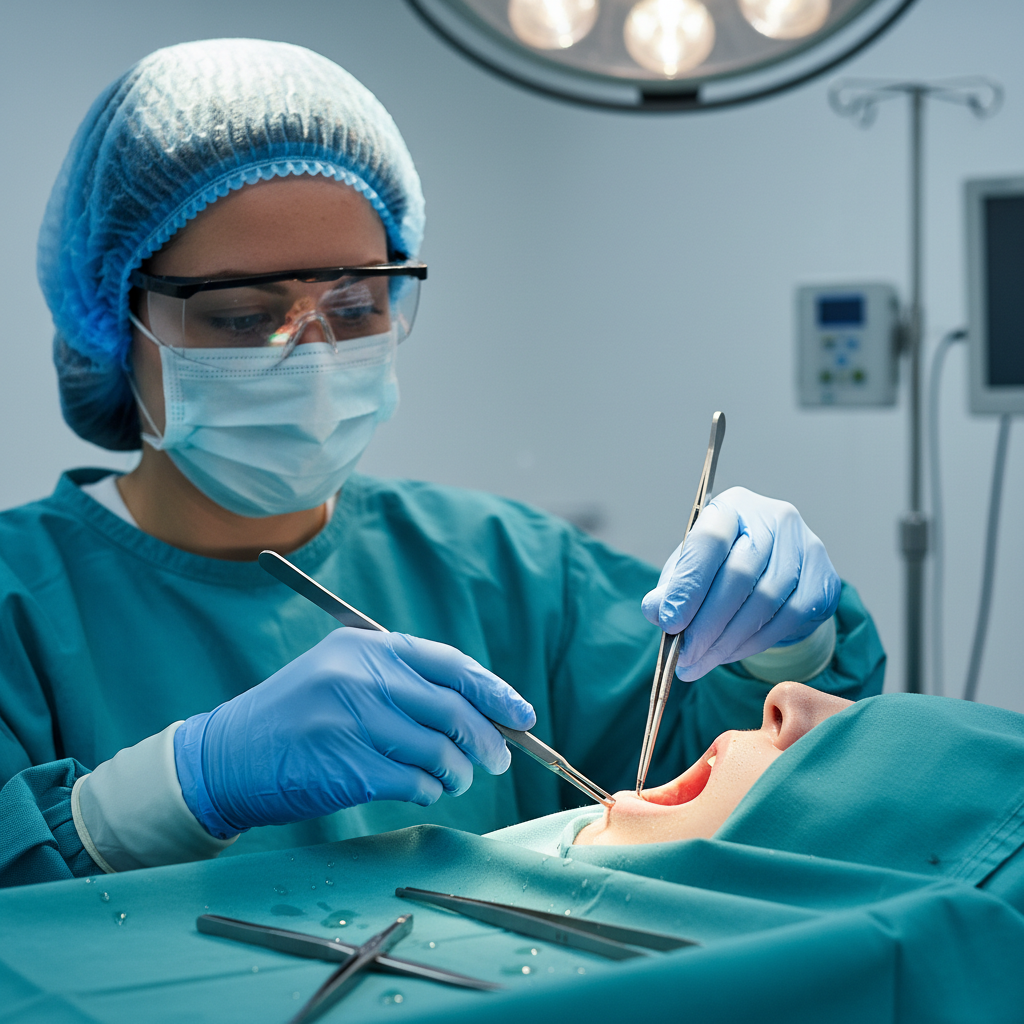
Dr. Elaine Marchetti
DDS, MD, FACS
Dr. Marchetti completed her surgical residency at Johns Hopkins and spent three years as a craniofacial fellow at CHOP before joining this practice. She operates under general anesthesia at two hospital systems and has repositioned over four hundred maxillas — each measured to the millimeter. She will sit down with you, trace your panoramic X-ray, and tell you precisely what she plans to do.
Craniofacial Surgery, Children's Hospital of Philadelphia (CHOP), 2014–2016
12 peer-reviewed publications in Journal of Oral & Maxillofacial Surgery on Le Fort outcomes and skeletal stability
What happens during Le Fort I Osteotomy
Pre-operative planning
2–3 weeks priorCT scan and digital surgical planning software determine the exact millimeter repositioning for your jaw. We print a surgical splint specific to your anatomy.
General anesthesia induction
~20 minOur board-certified anesthesiologist places you under general anesthesia. You will be completely asleep and feel nothing throughout the procedure.
Osteotomy cuts
45–60 minDr. Marchetti makes precise cuts through the maxillary bone above the tooth roots, separating the upper jaw from the skull base along the planned Le Fort I line.
Repositioning and fixation
30–40 minThe maxilla is moved to its new position — forward, back, up, or down — and secured with titanium plates and screws that are 2–4mm in diameter and remain permanently.
Closure and recovery
20 min + overnight stayDissolvable sutures close the incisions. You wake in recovery, typically 1–2 nights in hospital, then monitored outpatient follow-up over 8–12 weeks.
I had been told I needed jaw surgery for six years and kept putting it off because no one could explain it without making me feel like I was being sold something. Dr. Marchetti spent forty minutes with me at that first visit. She drew on my X-ray with a pen. I booked surgery before I left the building.
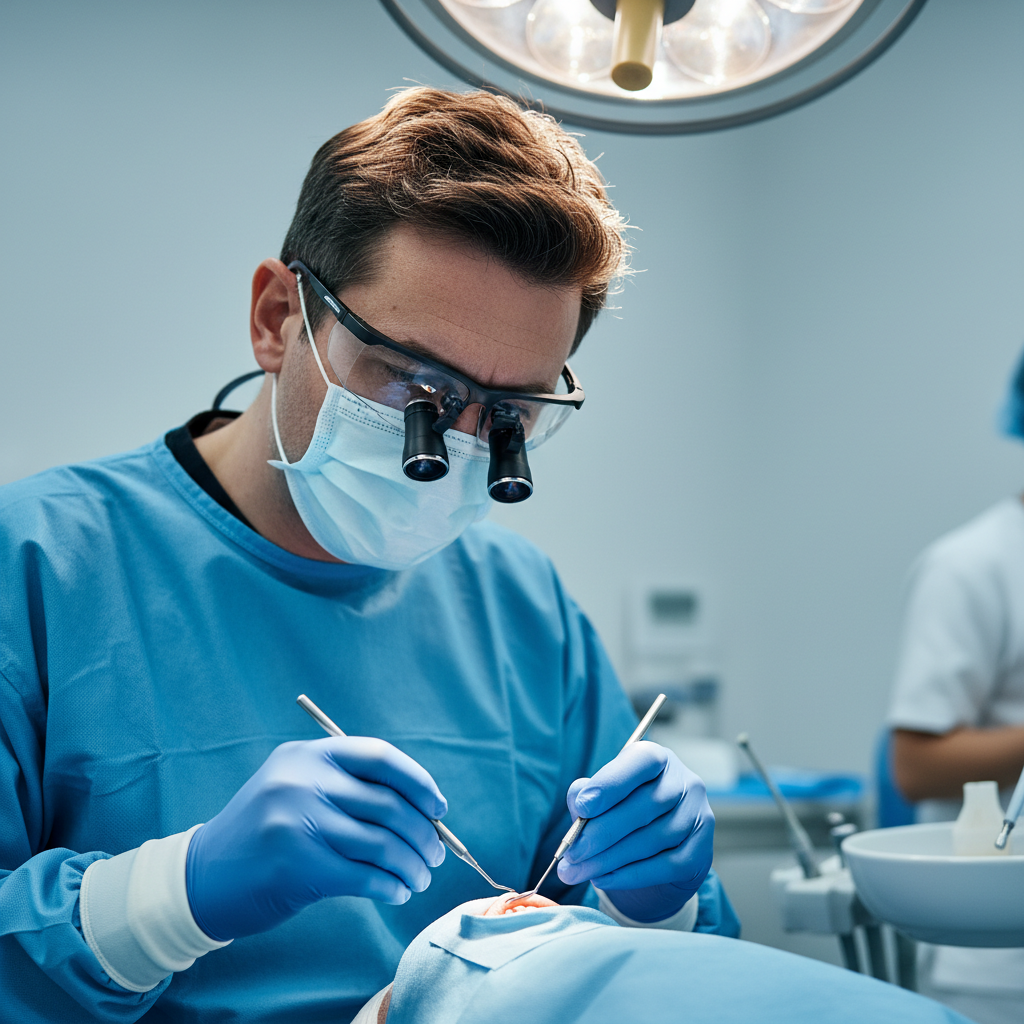
Dr. James Okafor
DDS, MS
Dr. Okafor trained at the University of Michigan and has spent fifteen years refining the technique of sectioning deeply impacted third molars with minimal trauma to the inferior alveolar nerve. He sees the majority of the practice's teenage and young adult referrals. His patients consistently describe the consultation as the first time they understood what a wisdom tooth extraction actually involves — not a vague reassurance, but a specific, step-by-step explanation.
Dentoalveolar and Implant Surgery, University of Michigan School of Dentistry, 2009–2011
7 publications including a landmark study on nerve proximity assessment using CBCT for mandibular third molars
What happens during Impacted Wisdom Tooth Extraction
Consultation and imaging review
30–45 min consultWe review your panoramic X-ray and, if the roots are near the inferior alveolar nerve, order a CBCT scan for 3D nerve mapping. You leave the consultation knowing exactly what's impacted and why.
Anesthesia (IV sedation or general)
10–15 minMost wisdom tooth cases use IV sedation — you're deeply sedated but breathing on your own. For complex cases or anxious patients, general anesthesia is available at our hospital facility.
Soft tissue access
5 min per toothA small incision exposes the wisdom tooth. The gum is reflected back with a periosteal elevator to give Dr. Okafor direct visualization of the tooth and surrounding bone.
Bone removal and sectioning
10–25 min per toothFor horizontal or deeply impacted teeth, a small amount of overlying bone is removed with a surgical handpiece. The tooth is then sectioned into 2–3 pieces with a fine surgical bur — each piece removed individually to avoid levering against the nerve.
Socket irrigation and closure
10 min per toothThe socket is irrigated with sterile saline, inspected for remaining fragments, and sutured with dissolvable sutures. A gauze pack controls initial bleeding. You're monitored in recovery for 30–45 minutes.
My son is 17 and has been terrified of dentists since he was small. Dr. Okafor showed him the CBCT scan on a screen, explained exactly where each tooth was and why it needed to come out, and let him ask every question he had. My son came out of surgery and the first thing he said was 'it was way less than I thought.' That's the whole thing.

Dr. Priya Nair
DMD, MS, FICOI
Dr. Nair completed a two-year implant surgery fellowship at NYU and has since placed over eighteen hundred titanium implants, including complex cases requiring sinus lifts and vertical bone grafts. She works closely with restorative dentists so that by the time you sit in her chair, the implant position is already planned around your final crown. Patients who've postponed implants for years — often because a previous consultation felt like a pitch for an expensive procedure — find that Dr. Nair's approach is the opposite: she starts by telling you if you're a good candidate and what realistic success looks like.
Implant Surgery and Bone Reconstruction, NYU College of Dentistry, 2012–2014
9 publications on sinus lift outcomes and narrow-diameter implants in the Journal of Periodontology and Clinical Implant Dentistry
What happens during Titanium Implant Placement
Restorative-driven planning
2–4 weeks pre-opBefore we plan the implant position, we work backward from your final crown. A CBCT scan maps your bone volume and density. A surgical guide is fabricated so the implant is placed exactly where your restorative dentist needs it.
Anesthesia and site preparation
15–20 minLocal anesthesia with IV sedation is standard. A small incision exposes the alveolar ridge. If bone grafting is needed, it's done at this stage before the implant is placed.
Guided implant drilling sequence
20–35 minUsing a surgical guide, Dr. Nair drills a precise osteotomy through the cortical and cancellous bone. Drills increase in diameter in a calibrated sequence to protect the bone cells and maximize primary stability.
Titanium fixture placement
10–15 minThe titanium implant is torqued into the osteotomy to a precise insertion torque (typically 35–45 Ncm). This primary stability is what allows osseointegration — the bone growing directly onto the implant surface — to begin.
Healing period and integration
8–16 weeksThe implant integrates with bone over 8–16 weeks. We take periodic X-rays to confirm osseointegration before referring you back to your restorative dentist for the crown.
I had been quoted implants at three different places and every time it felt like they were selling me a car. Dr. Nair's first question was whether I actually needed an implant or if there were other options I hadn't considered. We talked through everything. She told me my bone was good, explained the whole sequence clearly, and I understood for the first time why it takes months. I trusted her immediately.
Book a Consultation
Three questions. One call to confirm.
Tell us what you need, who sent you, and when you're available. Our patient coordinator will call within one business day to confirm your appointment and request your records from your referring dentist.
Your information is encrypted and never shared without your consent
We request your X-rays and records directly — you don't need to bring anything
Consultations typically run 45–60 minutes — no rushed assessments
We verify your insurance benefits before your visit and explain costs upfront
Prefer to call?
(415) 882-3940 · Mon–Fri 8am–5pm PT